Bicycle Accident Lawyer Advice on Helmet and Liability Issues
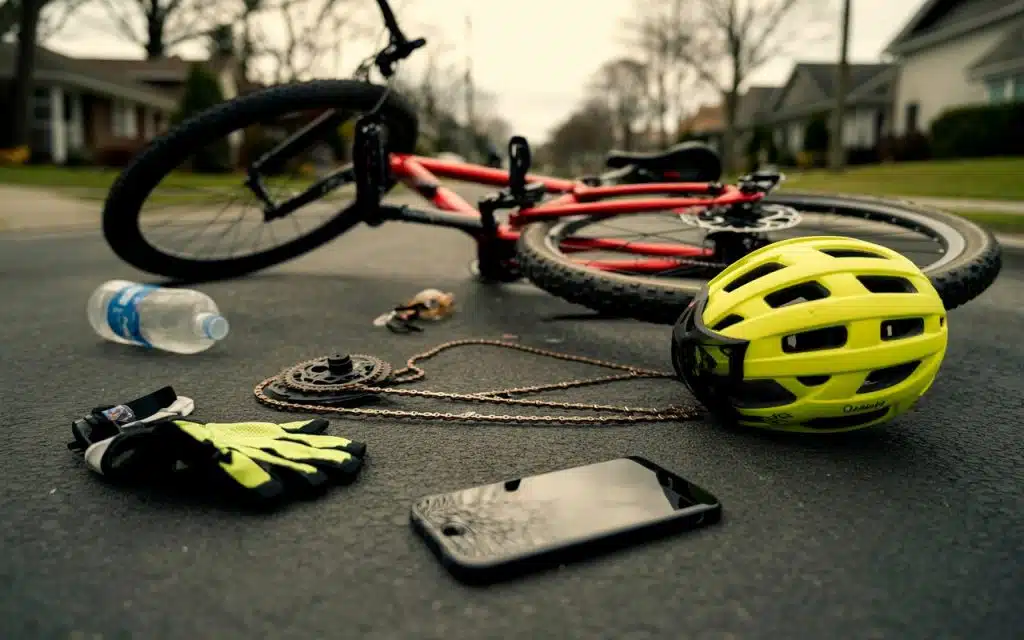
A serious bicycle crash turns ordinary details into legal facts very quickly. The route you took, the speed of traffic, the paint lines on the road, the condition of your brakes, the statements made at the scene, and whether you were wearing a helmet can all become part of an insurance claim or lawsuit. People often assume the helmet question settles everything. It does not. In most cases, helmet use is one factor among many, and often not the most important one.
That distinction matters because injured cyclists are frequently blamed before anyone studies the evidence. A driver may insist the rider “came out of nowhere.” An insurer may suggest that the cyclist accepted the risk of serious injury by riding without a helmet. Friends or relatives may repeat the same idea, usually out of fear rather than legal knowledge. A good Bicycle Accident Lawyer looks at the actual chain of events and asks the harder questions: who had the right of way, what impact angle matches the damage, was there a safe passing distance, was the driver distracted, did road design contribute, and what injuries would likely have occurred even with a helmet.
Helmet issues do matter, but usually in a narrower way than most people think. They can affect the value of a claim in some situations, especially where head injuries are involved. They usually do not excuse a negligent driver from causing the crash in the first place. Understanding that difference is one of the most practical things an injured cyclist can do early on.
Why helmet questions come up so often
Insurance adjusters and defense lawyers focus on helmets because the topic is familiar to jurors and emotionally charged. Most people understand, at least in broad terms, that helmets reduce the risk of certain head injuries. That makes the issue easy to raise and easy to oversimplify.
The law, however, tends to sort liability into separate buckets. One bucket asks who caused the collision. Another asks what injuries followed, and whether any of those injuries could have been reduced. That separation is important. If a motorist runs a stop sign and hits a cyclist lawfully crossing an intersection, the lack of a helmet usually does not change who caused the crash. It may become relevant only if there is a claim for head trauma and the defense can prove, not speculate, that a helmet would likely have lessened the severity of that specific injury.
That is a much more technical inquiry than people expect. It is not enough for a defendant to say, “A helmet would have fixed this.” The analysis often requires biomechanics, medical testimony, helmet standards, injury pattern review, impact reconstruction, and a careful look at whether the cyclist struck a vehicle, the pavement, a curb, or another object. In practice, the defense theory often sounds stronger in conversation than it does under scrutiny.
The first legal question is usually fault, not gear
Many injured riders make the same mistake in the days after a crash. They become so worried about not wearing a helmet, or about some small riding mistake, that they stop paying attention to the larger negligence picture. That is exactly backward.
Fault usually turns first on conduct. Did the driver fail to yield? Was the driver speeding? Was there an unsafe lane change? Did the driver open a door into the cyclist’s path? Was the driver looking at a phone? Did the driver crowd the cyclist off the road? Did the municipality ignore a dangerous road defect after repeated complaints? Those are core liability issues.
A cyclist can be perfectly helmeted and still be hit by a negligent driver. A cyclist can also be unhelmeted and still have a strong case if the evidence shows the motorist caused the crash. One fact does not erase the other.
This is also where local law matters. Some states and countries use contributory negligence rules that are extremely harsh. Others apply comparative negligence, which reduces recovery by a percentage tied to the injured person’s share of fault. Some jurisdictions have specific statutes or case law on helmet admissibility. A Bicycle Accident Lawyer will usually begin by separating three questions that laypeople often blend together: what caused the collision, what caused the injury, and what evidence a court will even allow a jury to hear.
Helmet laws are not uniform, and that matters
Helmet law varies widely. Some places require helmets only for minors. Some apply rules to riders under a certain age but not adults. Some have local ordinances layered on top of state law. Some jurisdictions treat e-bikes differently from traditional bicycles. Others create separate categories for mopeds, scooters, or class-based electric bicycles.
That variation affects how a claim develops. If an adult cyclist is not legally required to wear a helmet, the defense may still argue common sense, but the absence of a statutory violation weakens the moral framing. If a minor was legally required to wear one, the issue may gain traction, though even then it does not automatically bar recovery. Courts often ask whether the law was designed to prevent the kind of harm that occurred and whether the noncompliance had a real causal connection to the injury.
The practical lesson is simple: never assume a general rule you heard elsewhere applies to your case. A rider in one state may face a very different legal landscape from a rider in the next state over, even when the crash facts look similar.
Not wearing a helmet does not usually excuse a driver’s negligence
This is the point injured cyclists need to hear clearly. Drivers do not get a free pass because the person they hit lacked ideal safety equipment.
If a driver turns across a bike lane without checking mirrors, opens a door into a rider, drifts onto the shoulder, or runs a red light, the negligent act stands on its own. The law generally does not allow a wrongdoer to shift all blame by pointing to a victim’s vulnerability. The same logic appears in many injury cases. A careless driver cannot avoid responsibility because the pedestrian was elderly, because the motorcyclist lacked the heaviest jacket available, or because a crash victim had a preexisting condition that made injuries worse.
Cyclists are often physically exposed, and the law typically recognizes that exposed road users deserve reasonable care from motorists, not less.
Where helmet evidence has more bite is in damages. If the central injury is a skull fracture, traumatic brain injury, facial trauma, or scalp laceration, the defense may argue that the damages should be reduced because the rider failed to mitigate foreseeable harm by not wearing a helmet. Whether that argument succeeds depends on the jurisdiction and the proof.
The hidden fight is often over causation
Causation sounds abstract until you see how often it decides value. A driver’s insurer may concede a traffic violation and still spend months fighting over whether the worst injury was preventable. That fight can make a six figure difference, sometimes more.
Consider a common scenario. A cyclist is sideswiped by a passing pickup truck and thrown onto the roadway. The rider suffers a broken clavicle, a torn meniscus, road rash, and a concussion. The insurer may argue that the concussion symptoms would have been much milder with a helmet. But the broken shoulder and knee damage are unrelated to helmet use. Lost wages tied to surgery recovery, physical therapy, and mobility limits may remain fully claimable even if the head injury damages are contested.
Now take another example. A rider is struck at low speed in a crosswalk by a turning SUV, falls backward, and suffers a severe occipital skull fracture. Here, the helmet argument may carry more force, depending on the impact mechanics and medical testimony. Yet even in that harder case, the defense still has to show more than possibility. It has to link the injury pattern to the sort of protection the helmet would likely have provided.
Lawyers who handle these claims regularly know that causation lives in details. The shape of the dent on the car hood, the scrape pattern on the pavement, the position of the bike after impact, helmet retention strap marks, emergency department notes, and the first radiology report can all become important.
What a Bicycle Accident Lawyer looks for right away
Early case handling often determines whether helmet issues stay manageable or become a serious problem. Evidence fades quickly. Drivers change stories. Nearby businesses record over old footage. Bikes get repaired or discarded by well meaning relatives. Helmets, if there was one, get tossed into a garage without documentation. The first days matter.
A strong lawyer usually wants to secure the physical and digital record before everyone starts editorializing about fault. That means obtaining photographs, body cam footage if police responded, 911 calls, witness names, dash cam files, app ride data, health records, and the bicycle itself. If there was a helmet, the condition of that helmet may matter a great deal. Cracks, liner compression, abrasion marks, and strap position can support or undermine both sides’ theories.
Here is the kind of immediate post-crash checklist that tends to help more than people realize:
- Preserve the bicycle, helmet, clothing, lights, and damaged accessories exactly as they are.
- Get prompt medical evaluation, even if symptoms seem delayed or manageable at first.
- Avoid giving recorded statements to the driver’s insurer before getting legal advice.
- Photograph injuries and healing progress over several weeks, not just on the first day.
- Write down your memory of the crash while details are still fresh.
That short list can materially improve a case. People are often surprised by how useful torn sleeves, bent handlebars, and shoe scuffs become when reconstruction experts analyze body position and fall dynamics.
When helmet nonuse can reduce damages
There is no honest way to discuss this topic without acknowledging risk. In some cases, not wearing a helmet can reduce compensation. The question is when, by how much, and for which injuries.
Courts do not approach this issue uniformly. Some exclude helmet evidence entirely unless there is a firm evidentiary foundation. Some permit the evidence only on damages and only for head injuries. Some allow broader comparative fault arguments. Others treat helmet nonuse similarly to seat belt nonuse, while still recognizing important differences between cycling and motor vehicle regulation.
Even where helmet evidence comes in, the reduction is rarely as simple as people imagine. An insurer may imply that “no helmet” means a huge discount across the whole claim. That is often wrong. Damages are usually divided into categories such as medical bills, future treatment, lost earnings, pain and suffering, and property loss. If the primary dispute is whether a helmet would have reduced a concussion, that issue may not touch the value of a fractured wrist, a dental injury caused by direct facial impact, or months of lost income from lower body injuries.
Experienced counsel will often press for precision. Which diagnosis is allegedly helmet preventable? What testing supports that claim? What model helmet is being assumed? What fit and fastening condition? What impact speed? What strike location? If the defense cannot answer those questions credibly, the argument weakens.
Children, parents, and difficult liability optics
Cases involving children can be legally and emotionally different. Jurors tend to be more protective of young riders, but they also expect adults to supervise basic safety. If a child is struck while biking in a neighborhood and was not wearing a legally required helmet, the defense may try to shift attention toward parental responsibility. That can complicate settlement discussions even where the driver’s conduct was plainly unsafe.
Still, the same core principles apply. A speeding driver on a residential street cannot simply point to a child’s missing helmet and walk away from responsibility. The helmet question may affect the injury valuation, especially for head trauma, but it does not automatically displace the duty to drive carefully where children are likely to be present.
These cases often require extra tact. Families are already carrying guilt, fear, and anger. Good representation means reducing noise, not adding to it.
The role of medical records, and why wording matters
Medical records shape bicycle injury cases more than most clients realize. Emergency department notes often contain the earliest narrative of the crash. If those notes say “patient thrown over handlebars after being cut off by vehicle,” that language may support the rider. If the chart instead says “fell from bicycle,” the insurer may later pretend no contact happened at all.
Helmet status also gets recorded early. Sometimes that note is accurate. Sometimes it is not. A triage nurse may write “helmeted” based on assumption. A paramedic may write “unknown.” If the chart is wrong, it should be corrected carefully and honestly through proper channels, not through improvised explanations months later.
Medical language about mechanism matters because the helmet issue often intersects with diagnosis. For example, symptoms described as “brief loss of consciousness, retrograde amnesia, nausea, and photophobia” create a more grounded traumatic brain injury picture than a vague later complaint of headaches. Precision helps everyone assess the claim realistically.
A common insurer tactic, and how to answer it
One familiar tactic goes like this: the adjuster acts friendly, acknowledges the driver may share some blame, then circles back repeatedly to helmet use until the claimant starts apologizing. Once that happens, the adjuster has reframed the whole case around the rider’s choices rather than the driver’s conduct.
That dynamic is one reason injured cyclists benefit from counsel early. A Bicycle Accident Lawyer does not need to deny obvious facts. If there was no helmet, there was no helmet. The better approach is to place that fact where it belongs. It is a possible damages issue, for some injuries, subject to proof, in a case still centered on the defendant’s negligence.
I once saw a case posture change dramatically after bike lane camera footage surfaced. Before the footage, the insurer kept returning to the rider’s lack of a helmet and claimed the cyclist “lost control.” https://gunnerungd449.theglensecret.com/bicycle-accident-lawyer-guidance-on-comparative-negligence After the footage showed a delivery van cutting across the bike lane without signaling, the helmet argument shrank to a narrow fight about the concussion, while liability became difficult to dispute. Same crash, same injuries, different evidence picture.
Head injuries are not all the same
People use “head injury” as a catchall, but legal analysis becomes sharper when the injury is described accurately. A helmet may help with certain blunt force impacts. It may do less for rotational forces associated with some brain injuries. It may protect the skull while not preventing a concussion. It may reduce lacerations but not cervical strain. It may make little difference in very high energy collisions involving a large vehicle.
That nuance is one reason simplistic arguments often fall apart under expert review. If the defense expert says a helmet would have prevented a traumatic brain injury, the plaintiff may ask whether the injury came primarily from rotational acceleration rather than direct focal impact. If the expert claims a facial fracture was avoidable, the reply may be that many bicycle helmets do not cover the impact zone involved. Real cases turn on these specifics.
Judgment matters here. Not every case warrants a battle of biomechanical experts. Sometimes the economics do not support it. Sometimes the medical records already tell a strong enough story. A seasoned lawyer knows when to invest heavily in expert proof and when to keep the dispute narrow.
Road design, visibility, and the broader negligence picture
Helmet debates can distract from infrastructure failures that contribute to crashes. Poorly marked bike lanes, drainage grates aligned with tires, faded conflict zone paint, blocked sight lines, confusing signal timing, and construction detours without safe cycling alternatives all increase risk. So do parked cars that create door zones and intersections designed with turning radii that encourage fast vehicle movements.
When a crash happens in one of these environments, multiple parties may share responsibility. The driver might have been negligent, but so might a contractor, municipality, or property owner, depending on the facts and local immunity rules. Helmet nonuse does not erase those inquiries.
This broader lens is especially important when the driver appears underinsured. Identifying additional liable parties can be the difference between partial and meaningful recovery, particularly in cases involving surgery, prolonged disability, or permanent neurological symptoms.
Settlement value and real-world trade-offs
Clients often ask the question in its bluntest form: “Did not wearing a helmet ruin my case?” Usually, no. But it may change negotiation strategy.
Where liability is strong and injuries are mixed, counsel may separate the claim mentally into two tracks. One track contains damages the helmet issue cannot credibly touch, such as orthopedic injuries, scarring to uncovered body parts, bike replacement, wage loss from non-head injuries, and treatment expenses unrelated to head trauma. The other track contains damages likely to draw a helmet argument, mainly concussion, brain injury, skull, scalp, and sometimes facial injury components.
That approach can help when evaluating offers. It keeps the defense from using a broad brush. It also helps clients make informed decisions about settlement. Some will choose to compromise to avoid the expense and stress of competing experts. Others, especially those with substantial brain injury claims, may need a firmer evidentiary fight.
A useful way to think about it is this:
| Issue | Usually affected by helmet nonuse? | Notes | |---|---|---| | Who caused the crash | Often no | Usually turns on driving conduct and right of way | | Skull and scalp injuries | Often yes, potentially | Requires injury-specific proof | | Concussion or TBI damages | Sometimes | Highly fact dependent, often expert driven | | Broken limbs, knee, shoulder, spine injuries | Usually no | Unless tied to a separate fault argument | | Property damage and many wage losses | Usually no | Depends on what injuries caused time off work |
A table like this cannot replace legal advice, but it does capture the practical divide seen in many cases.
What to discuss with your lawyer early
The best attorney-client conversations on these cases are candid. If you were not wearing a helmet, say so immediately. If you removed it after the crash because you were disoriented, say that too. If you were wearing one but it was unbuckled or old, that matters. Surprises hurt cases more than uncomfortable facts do.
It also helps to talk through your riding habits and route. Were you using lights? Was the sun low and visibility poor? Were you in a marked bike lane or taking the lane for safety? Had there been prior close calls at that intersection? Did nearby cameras exist? Was there a speed bump, pothole, or sewer grate involved? These details may shape fault far more than helmet status.
A productive early meeting often covers five areas:
- The exact crash sequence and all known witnesses or video sources.
- The full injury picture, including delayed symptoms and prior medical history.
- Applicable helmet laws and whether helmet evidence is likely admissible.
- Insurance layers, including the driver’s policy and any underinsured coverage.
- Evidence preservation steps, expert needs, and realistic settlement timing.
That kind of grounded planning is far more useful than broad reassurance or panic.
The practical bottom line for injured cyclists
Helmet use is smart safety practice, and many injuries are less severe when riders wear one. That is the public health reality. The legal reality is more limited and more precise. Not wearing a helmet does not automatically make you responsible for a crash. It does not automatically destroy your claim. It does not hand a negligent driver immunity.
What it can do is create a narrower dispute over damages, especially if you suffered head trauma. Whether that dispute matters a little or a lot depends on local law, the injury pattern, the available evidence, and the skill with which the case is developed.
That is why early, case-specific advice matters. A Bicycle Accident Lawyer who understands both traffic liability and injury causation can keep the case focused where it belongs, on proof rather than assumptions. For cyclists, that shift is often the difference between being blamed in the abstract and being heard in the facts.
CGH Injury Lawyers
2701 Lawrence St Suite 201
Denver, CO 80205, United States
Phone: +1 720-669-8062
FAQ About Bicycle Accident Lawyer
Who is at fault if a car hits a bicycle?
Fault depends on the evidence and the traffic rules that applied to the collision. A driver, cyclist, or another party may share responsibility. Police reports, witness accounts, video, and the physical evidence can help establish what happened. A collision with a car does not automatically determine legal fault.
Can you sue someone for hitting you on a bike?
You may have a claim when another person's negligent conduct causes your injuries and losses. The available evidence, applicable deadlines, insurance coverage, and any shared fault affect your options. A lawyer can review the circumstances and explain whether an insurance claim or lawsuit is appropriate; compensation is not guaranteed.
What percentage does an injury lawyer usually take?
There is no single percentage that applies to every injury case. Many lawyers use a contingency fee based on a share of the recovery, with the terms stated in a written agreement. Ask how the percentage is calculated, whether it changes during litigation, and how case expenses are handled before signing.